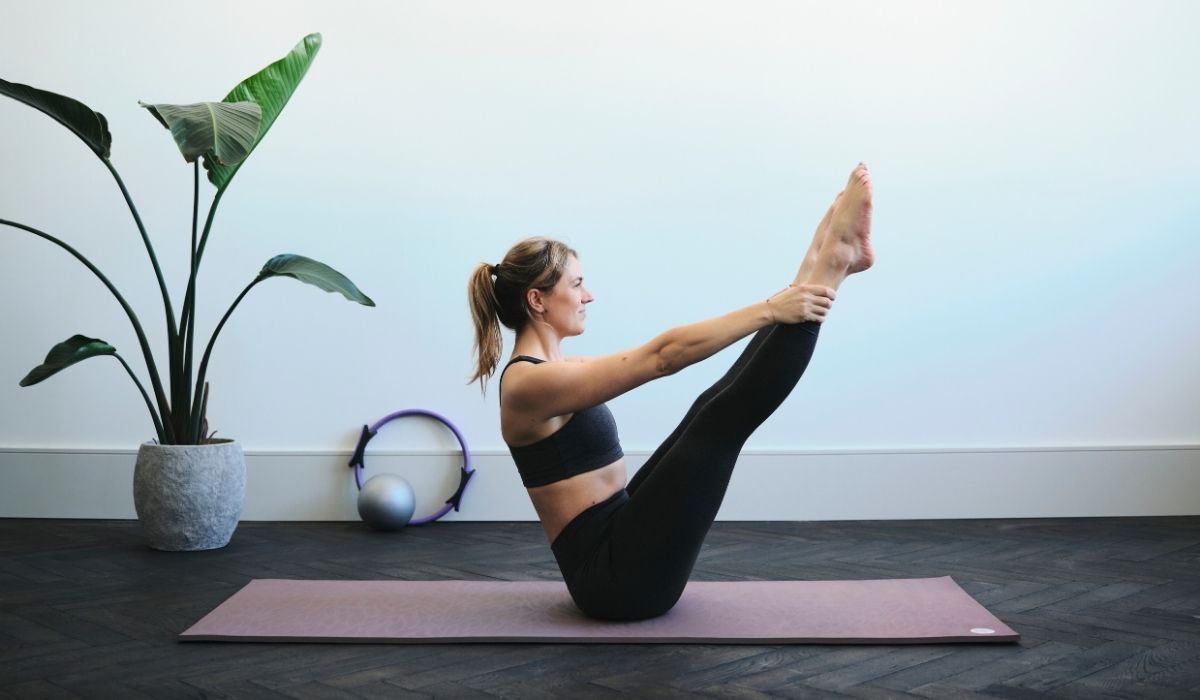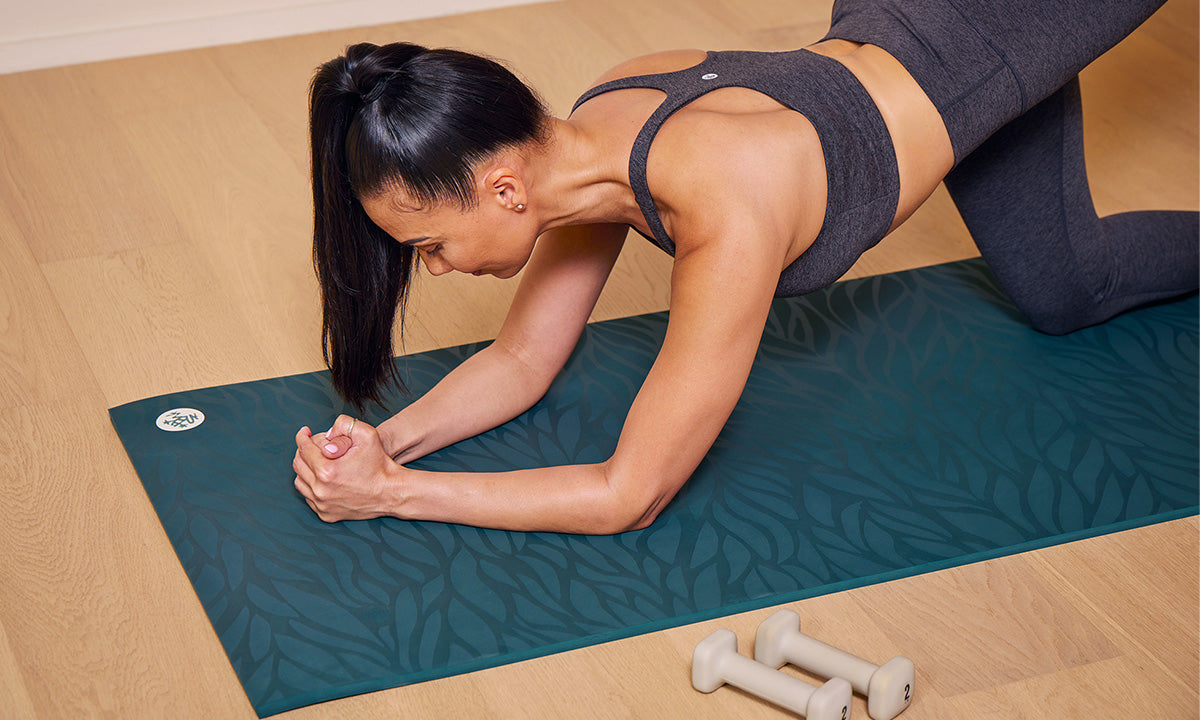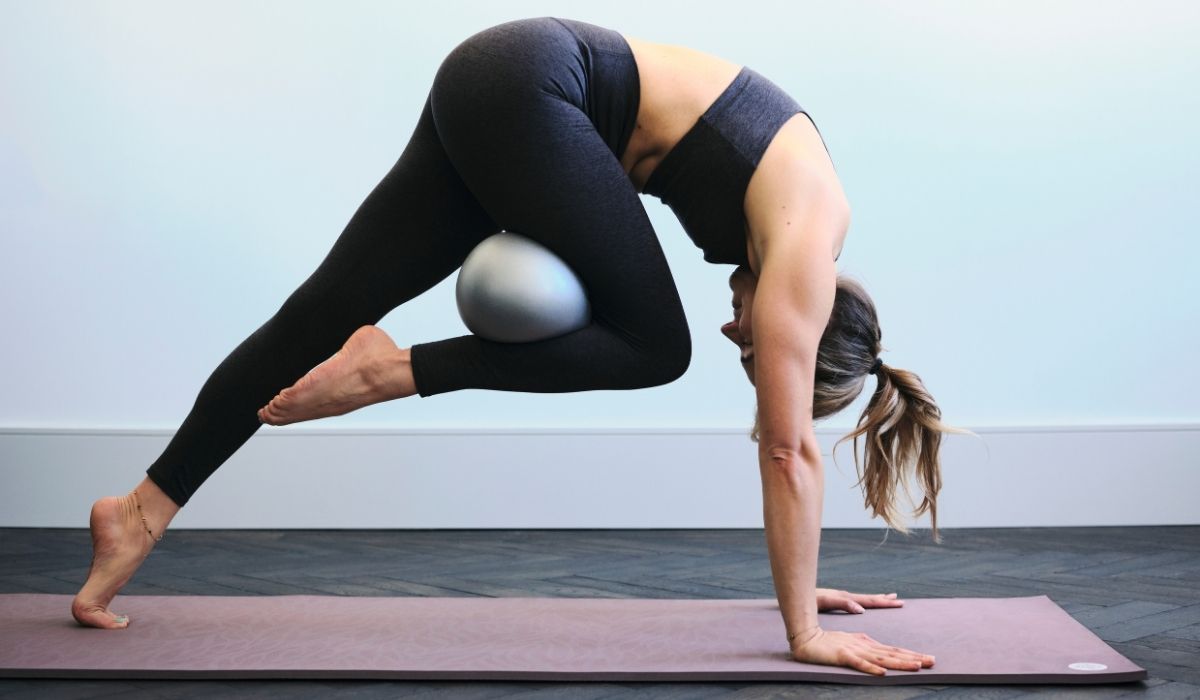
At first glance, yoga and Pilates can look surprisingly similar. Both can be practised on a mat, both use the breath as an important part of the practice, and both ask you to slow down enough to pay attention to what is happening inside your body.
Lara Beusenberg often meets people who already have experience with yoga and are curious about what Pilates could add to their movement practice. They recognise certain positions and understand the importance of breathing and body awareness, but are often surprised by how different an exercise feels when the intention behind it changes.
That intention is perhaps the most important place to start when we talk about the difference between yoga and Pilates.
Different Roots
Yoga has a history stretching back thousands of years and originates from a much broader Eastern philosophy in which movement, breath, mind and awareness are deeply connected. The physical practise that most of us recognise as yoga today is only one part of that tradition.
Pilates has a very different and much more recent history. Joseph Pilates developed his method, which he originally called Contrology, during the first half of the twentieth century. His approach was strongly influenced by physical training, gymnastics, martial arts and different movement practices, and he believed that a well-functioning body required strength, mobility, concentration, control and breath.
In yoga, a posture can become a place to explore your breath, create space in the body, practise awareness or simply stay and observe what happens. In Pilates, we are generally more interested in how the body organises itself while it moves.
Can you lift one leg without your entire pelvis following? Can you move your arms overhead while maintaining the organisation of your ribcage and spine? Can you move from your hip joint without asking your lower back to create the movement instead?
These details are at the heart of Pilates. We are not only interested in whether you can perform a movement, but in how you perform it, where the movement comes from and what your body needs to do to control it.

More Than Abs
Ask someone what they know about Pilates and there is a good chance they will mention the core. Pilates has become almost synonymous with abdominal training, and while the abdominal muscles certainly play an important role, reducing Pilates to a core workout misses a large part of what makes the method so interesting.
In Pilates, we look at the body as an interconnected system. Your pelvis influences the way your spine moves, your ribcage influences your shoulders, your feet influence what happens higher up in your legs and hips, and your breathing mechanics influence all of these structures.
Rather than simply trying to make individual muscles stronger, we teach the body how to organise itself more efficiently.
A simple leg movement while lying on your back may look easy, but much more is happening beneath the surface. Your pelvis needs to respond to the changing load, your deeper abdominal muscles help manage the position of your trunk, your hip needs to move freely and your breathing needs to continue throughout the exercise.
Strength Meets Mobility
One of the areas where yoga and Pilates can complement each other beautifully is the relationship between flexibility, mobility and strength.
Depending on the style of yoga you practise, you may spend time moving into larger ranges of motion or staying in a position long enough for the body to gradually release. Pilates tends to approach range of motion differently. We often want you to remain active while moving into and out of that range, which means your muscles are not only creating movement but also controlling it.
Instead of simply asking, “How far can you go?”, Pilates is interested in another question: “How well can you control yourself when you get there?”
This becomes especially interesting for people who are already naturally flexible or who have developed significant mobility through years of yoga practice.
Pilates can therefore add another layer to a yoga practice by building strength and coordination within the flexibility you already have.

The Power of Breath
Breathing is one of the clearest connections between yoga and Pilates, but it is also an area where the intention behind the practice differs.
Yoga has a rich tradition of breathing techniques, or pranayama, in which the breath can be used to influence attention, energy and the connection between body and mind.
In Pilates, breathing is closely connected to the physical mechanics of movement. We pay attention to how the diaphragm moves, how the ribcage expands and how the abdominal wall responds to breathing. In many contemporary Pilates approaches, you will be encouraged to breathe into the sides and back of the ribcage so that you can maintain appropriate abdominal support without holding your breath or unnecessarily bracing your body.
The exhale can also help facilitate the connection with the deeper abdominal muscles and pelvic floor, particularly during movements that require more trunk control.
The breath isn't something we simply add to an exercise. It becomes part of how the movement works.
Mind Meets Body
Pilates is often described as being more physical than yoga, and in many ways that is true. We spend a lot of time thinking about anatomy, biomechanics, coordination, strength and movement patterns.
But that doesn't mean Pilates is a mindless physical workout.
Once you start paying attention to your pelvis, spine, ribcage, shoulder blades, breath and limbs at the same time, you quickly discover that Pilates requires a great deal of concentration.
As a teacher, I often see people notice things they weren't aware of before. Perhaps they always shift into one side of their pelvis. Maybe their shoulders tense as soon as an exercise becomes difficult. Or perhaps their lower back has been creating movement that could actually come from their hips.
Over time, that awareness can move beyond the Pilates mat and into the way you sit, walk, lift, run or practise another sport.

Yoga or Pilates?
You don’t have to choose. Yoga and Pilates have different roots and goals, but that’s exactly why they work so well together.
Yoga often focuses on mobility, breath and awareness, while Pilates adds strength, stability and control. Together, they can support a more balanced movement practice and a deeper understanding of hour body moves.
And you don’t need to be flexible, strong or experienced to start. Both practices meet you where you are.
The mat is simply where you practise. What matters is how that practice helps you move, feel and live when you step off it.
Pilates with Lara
Yoga with Dian
Connect with Lara
Website: pilatesbylaar.com
Instagram: @pilatesbylaar
Upcoming retreats: Sahara Retreat Morocco March 14th - 21st 2027